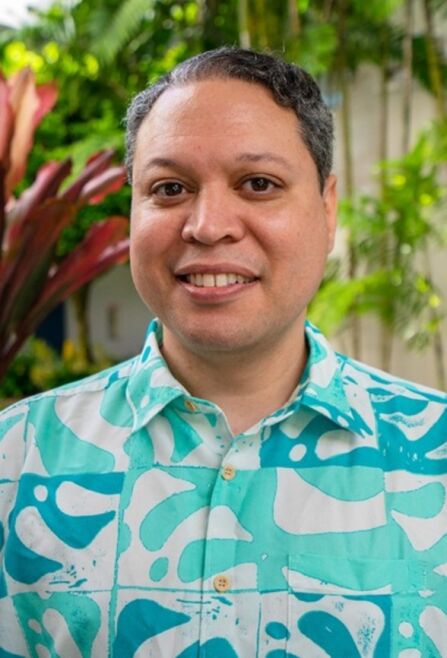
Dr. Alika K. Maunakea is a Native Hawaiian scientist and Professor in the Department of Anatomy, Biochemistry, and Physiology at the John A. Burns School of Medicine, University of Hawaiʻi at Mānoa. He earned his Ph.D. in Biomedical Sciences from the University of California, San Francisco, and completed postdoctoral training at the National Institutes of Health. For more than two decades, Dr. Maunakea has investigated how epigenetic mechanisms connect environmental and social conditions with human health and disease. His research integrates epigenomics, the gut microbiome, and population health to understand pathways linking nutrition, stress, and environmental exposures with inflammation, biological aging, and cardiopulmonary and metabolic disease. He directs multiomics core facilities within the Integrative Center for Precision Nutrition and Human Health and leads NIH-funded, community-engaged studies addressing health disparities among Native Hawaiian and Pacific Islander communities, including the Hawaiʻi Social Epigenomics of Early Diabetes (HI-SEED) study. Following the 2023 Maui wildfires, Dr. Maunakea co-founded and co-leads the Maui Wildfire Exposure Study (MauiWES). This ongoing longitudinal, community-based initiative combines environmental biomonitoring, physical and mental health assessments, and socioeconomic data to investigate the long-term health consequences of the disaster while connecting participants with healthcare resources. Recent findings identified elevated urinary metal concentrations associated with impaired lung function, underscoring the importance of sustained health monitoring after urban wildfires. Grounded in community partnerships and Indigenous perspectives on health, Dr. Maunakea’s work bridges molecular discovery and public health to identify opportunities for earlier prevention, inform equitable recovery, and strengthen community resilience. He is also committed to mentoring the next generation of biomedical scientists.
 Back